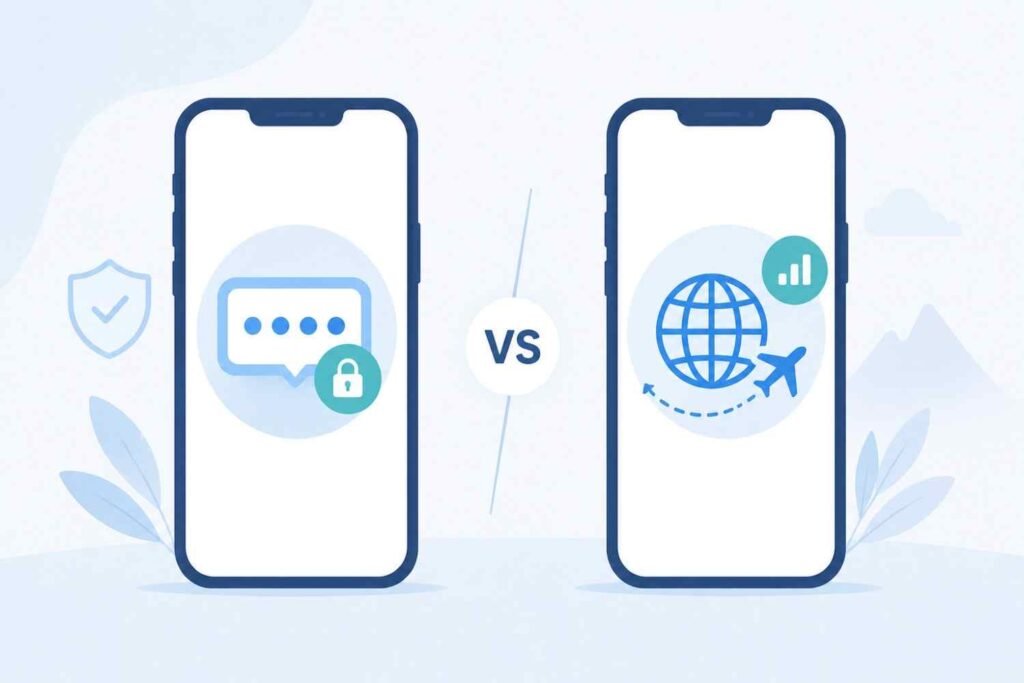
“Best” depends heavily on what kind of trip you’re taking — a short business visit has different needs than a month-long stay. Here’s a practical breakdown by use case, rather than a single one-size-fits-all pick.
What Actually Varies Between eSIM Providers
Since most USA eSIM plans run on the same three underlying networks (AT&T, T-Mobile, Verizon) regardless of provider branding, the real differences between options usually come down to:
- Data structure (hard cap vs. throttled unlimited)
- Plan validity period (how many days the plan lasts)
- Whether calls/SMS are included, or data-only
- Price at a given data tier
- Ease of activation and customer support
By Use Case: Short Trips (Under a Week)
For a short visit, a smaller hard-cap data plan is usually the most cost-effective choice, since you’re less likely to need extended high-speed data throughout an entire month. Check the plan’s validity period matches your actual trip length — a plan good for 7 days doesn’t help if your trip runs 10.
By Use Case: Extended Stays or Digital Nomad Work
For longer stays, a throttled “unlimited” plan often makes more sense, avoiding the risk of running out of data mid-trip and needing a top-up. If you’re working remotely and relying on video calls, check the post-throttle speed specifically — some throttled tiers are too slow for reliable video conferencing.
By Use Case: Needing a US Number Alongside Data
If you need both US mobile data and a US phone number (for account verification, staying reachable, or business purposes), eSIMFire offers both as separate products from a single provider, which can simplify managing everything in one place rather than juggling multiple providers. (Disclosure: eSIMOTP is operated by the same team as eSIMFire.)
By Use Case: Budget-Conscious Light Data Use
If you mainly need data for maps, messaging, and occasional browsing, a small hard-cap plan (in the 1-5GB range) is typically the cheapest option and usually sufficient, assuming you’re not streaming video or relying heavily on hotspot use.
What to Check Regardless of Which Option You Choose
- Your device’s eSIM compatibility, confirmed before purchase since most eSIM purchases are final
- Which underlying carrier network the plan uses, especially if your trip includes rural areas or national parks
- Whether the plan is data-only, and whether that matters for your specific communication needs
Frequently Asked Questions
Is there one USA eSIM plan that’s objectively best for everyone?
No — the right choice depends on trip length, data needs, and whether you also need a US phone number, not a single universal answer.
Do more expensive USA eSIM plans always mean better coverage?
Not necessarily — coverage depends on the underlying carrier network the plan uses, not the price point, so a cheaper plan on a strong network can outperform a pricier plan on a weaker one in a specific area.
Should I buy a data-only plan or one that includes calls and texts?
This depends on whether you rely on traditional calling/SMS or use apps like WhatsApp and iMessage instead — many travelers find data-only sufficient.
Can I switch USA eSIM plans partway through my trip if my needs change?
This generally requires purchasing a new plan rather than modifying an existing one, since most eSIM plans are fixed once purchased.
Is it worth getting both a US eSIM and a US virtual number?
Only if you specifically need both a US phone number and US data connectivity — many travelers only need one or the other, depending on their situation.